
From the intricate components inside your smartphone to the critical parts of an aircraft engine, modern life is built on a foundation of precision. At the heart of this revolution is a technology that combines digital design with mechanical force: CNC machining. CNC Machining Explained simply is a subtractive manufacturing process that has changed what is possible in production, offering unmatched accuracy, repeatability, and complexity. As industries demand tighter specs and faster innovation cycles, understanding CNC is crucial for anyone involved in creating physical products. The global CNC Machine market reflects this, with projections showing it will grow from USD 94.62 billion in 2023 to USD 152.92 billion by 2030, according to Fortune Business Insights, driven by the relentless need for automation and precision. This guide explains the core principles of CNC machining, its diverse applications, and how digital files become tangible, finished parts.

CNC machining is a subtractive process that removes material to create a part, in contrast to additive processes like 3D printing that build a part layer by layer.
At its core, Computer Numerical Control (CNC) is an automated manufacturing method where pre-programmed computer software dictates the movement of factory tools and machinery. The process uses a machine to methodically remove material from a solid block —often called the workpiece or blank—to create a final part based on a detailed digital design. This subtractive method stands in contrast to additive processes like 3D printing, which build objects layer by layer. CNC provides an incredibly precise and repeatable way to produce CNC machined parts from a vast range of materials, including metals, plastics, and composites, forming the backbone of the modern manufacturing industry.
From Manual Craft to Automated Precision
Before the advent of CNC, manufacturing was an art form reliant on the steady hands of skilled operators. Using manually operated machines like lathes and mills, they would use handwheels and levers to guide cutting tools. This process was labor-intensive, timeconsuming, and heavily dependent on the operator’s individual skill, leading to inevitable variations between parts. The arrival of Numerical Control (NC) in the mid-20th century, which used punched tape to store instructions, began the shift toward automation. The
subsequent evolution to Computer Numerical Control replaced these physical media with digital programs. This change transformed manufacturing, enabling the mass production of complex, identical components and significantly reducing the need for human intervention during the cutting process.
CNC Machining Explained: Why Precision Matters in Today’s World
In today’s advanced industries, precision is not a luxury; it is a fundamental requirement. In the aerospace industry, a component’s deviation by a fraction of a millimeter can have catastrophic consequences. In medical devices, the fit and function of an implant directly impact patient outcomes. CNC machining delivers the ability to hold extremely tight geometric tolerances—the permissible limits of variation in a physical dimension. This precision ensures that parts fit together perfectly, perform reliably under extreme stress, and meet the stringent safety and quality standards that define modern technology, making CNC machining essential for modern manufacturing.
The Blueprint: CAD/CAM Software and Digital Design
The CNC manufacturing journey begins not in a machine shop, but on a computer. Designers and engineers use Computer-Aided Design (CAD) software to create a highly detailed 2D or 3D model of the desired part. This digital blueprint, often based on a traditional technical drawing, contains every geometric detail required for production. Once the design is finalized, the CAD file (often in a universal format like STEP or IGES) is imported into Computer-Aided Manufacturing (CAM) software. The CAM software acts as a crucial translator, converting the visual 3D model into a detailed set of machine-readable instructions, known as toolpaths, that the CNC Machine will follow precisely to cut the part.

Speaking to the Machine: G-code and M-code
The instructions generated by the CAM software are written in a programming language called G-code (geometric code). This is the fundamental language of virtually every CNC Machine. G-code commands are alphanumeric instructions that tell the machine’s controller where to move, how fast to move, and what path to follow based on a Cartesian coordinate system (X, Y, Z). For example, a command might instruct the tool to move to a specific coordinate at a designated feed rate. G-code is often accompanied by M-code
(miscellaneous function code), which controls non-geometric machine functions, such as turning the spindle on and off, activating coolant systems, or initiating an automatic tool change. Together, they form a complete program that guides the entire machining operation from start to finish.
The Anatomy of a Modern CNC (Computer Numerical Control) Machine
While designs and capabilities vary widely, every CNC Machine shares core components that work in harmony. The controller is the brain, reading the G-code from a GUI control setup and translating it into electrical signals. These signals drive powerful servo motors or stepper motors that precisely control the movement of the machine’s components along multiple axes. The spindle holds and rotates the cutting tool at high speeds, often thousands of RPM. The workbed, or table, securely holds the workpiece in place using clamps or vises. Finally, the cutting tools themselves—drills, end mills, taps—are the instruments that perform the actual material removal, shaping the raw stock into the final, high-precision part.
CNC Milling: Shaping Complex Geometries
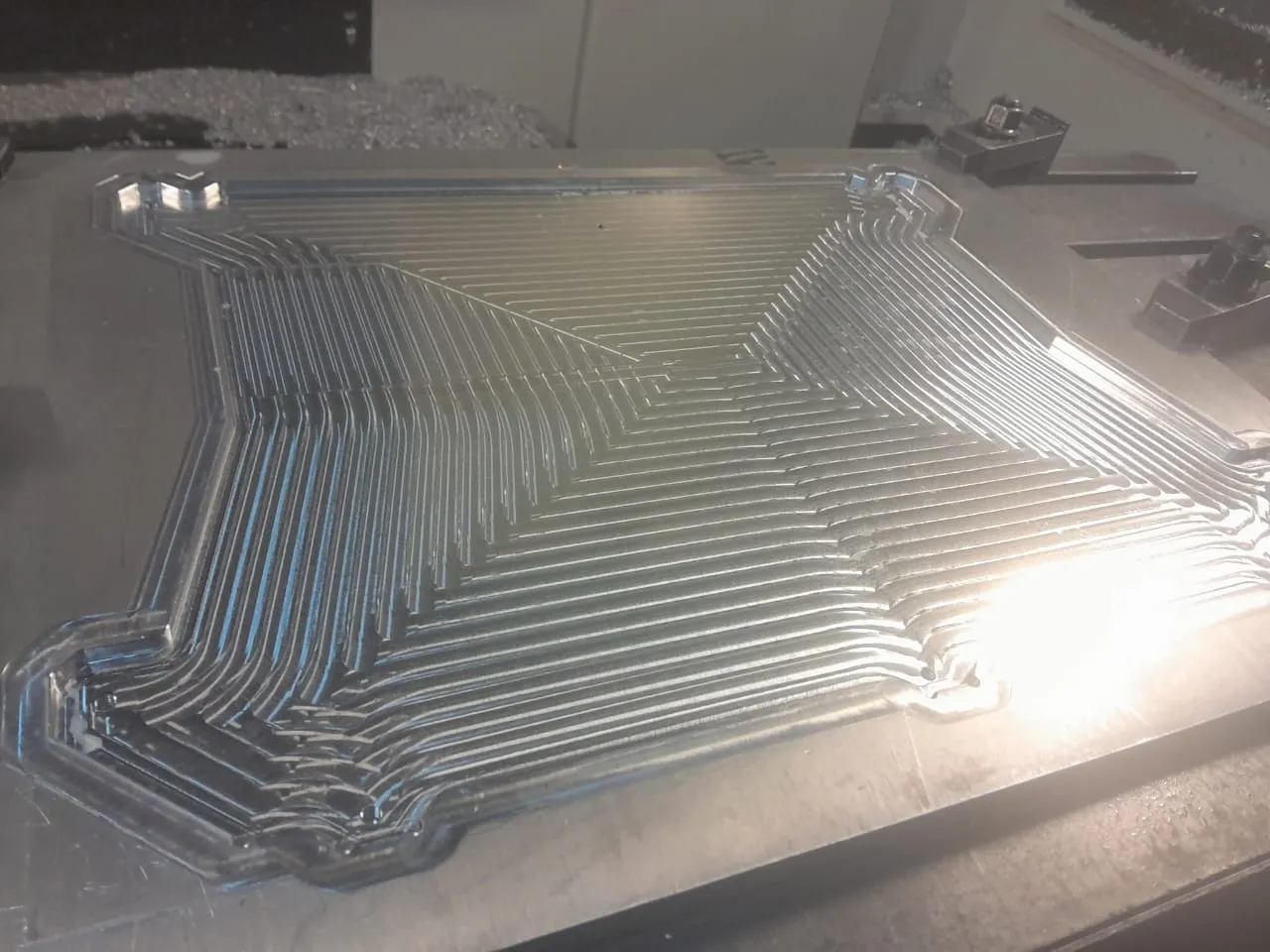
CNC Milling is a subtractive process where a rotating, multi-point cutting tool is used to remove material from a stationary workpiece. CNC Mills are incredibly versatile, ideal for creating flat surfaces, pockets, tapped holes, slots, and complex 3D contours. The most common type is a 3-axis CNC milling machine, which moves the tool along the X, Y, and Z linear axes. More advanced Multi-Axis CNC milling machines, such as those capable of 5-axis milling, can move the tool and the workpiece simultaneously across five axes. This allows for the creation of incredibly intricate geometries, like those found in turbine blades or complex medical implants, often in a single setup, reducing production time and improving accuracy.
A well-known example is the Haas V-F Series Milling Machine, a workhorse in many CNC machine shops.
CNC Turning: The Art of Rotational Symmetry
In contrast to milling, CNC turning, performed on a CNC lathe, involves rotating the workpiece at high speed while a stationary single-point cutting tool removes material. This process is perfect for creating cylindrical, conical, and spherical parts such as shafts, pins, and custom fittings. Modern CNC lathes often feature advanced capabilities like live tooling. These mill-turning CNC centers are equipped with secondary rotating tools (like end mills or drills) on a turret, allowing them to perform milling or drilling operations on the rotating part. This eliminates the need to move the component to a separate machine,
drastically increasing efficiency and reducing setup costs.
Specialized CNC Processes and Complementary Technologies
The world of CNC extends far beyond traditional mills and lathes. CNC Routers are commonly used for cutting softer materials like wood, plastics, and aluminum sheets. CNC Plasma Cutters use a high-velocity jet of ionized gas from a plasma torch to slice through electrically conductive metals, while laser cutters use a focused beam of light for incredible precision on a variety of materials. Other specialized technologies include:
Electric Discharge Machining (EDM): Processes like Wire EDM and sinker EDM use electrical sparks to erode material, enabling the creation of complex shapes in very hard metals that are difficult to machine conventionally.
Water Jet Cutters: These machines use a high-pressure stream of water (often mixed with an abrasive) to cut through almost any material without generating heat, preserving the material’s properties.
CNC is often used alongside other technologies. For instance, a part made with a 3D printer might be post-machined to achieve a smoother surface finish or tighter tolerances, combining the speed of additive manufacturing with the precision of subtractive methods.

Metals: Strength, Durability, and Performance
Metals are the most common materials used in CNC machining due to their excellent mechanical properties and durability. Common choices include:
Aluminum Alloys: Aluminum 6061 is popular for its good strength-to-weight ratio and corrosion resistance. Aluminum 7075-T6 offers significantly higher strength, making it ideal for high-stress aerospace and automotive components.
Stainless Steel: Alloys like Stainless steel 304 offer superior corrosion resistance and strength, essential for medical instruments and food-grade equipment.
Other Metals: Exotic metals like titanium offer great durability and heat resistance for high-performance uses. Brass is valued for its electrical conductivity and ease of machining in electronics and plumbing fittings.
Plastics: Versatility, Lightweight, and Specific Properties
Plastics offer a diverse range of properties that make them suitable for countless applications. Materials like ABS are cost-effective and impact-resistant, perfect for consumer product housings and prototypes. High-performance plastics like PEEK (Materials: PEEK) can handle harsh chemicals and high temperatures. They often replace metals as a lightweight option in demanding electronics and medical uses. Other common plastics include Nylon for its excellent wear resistance in gears and bearings, and Acetal
(Delrin®) for its high stiffness and dimensional stability.
Key Considerations for Material Selection
Choosing the right certifiable material is a critical decision that impacts a part’s performance, cost, and manufacturability. Important factors include mechanical needs like strength, hardness, and flexibility. The operating environment matters too, such as temperature and chemical exposure. Cost is also a key factor. Another crucial aspect is machinability—how easily a material can be cut. Softer metals like aluminum are easier and faster to machine than hard materials like titanium, which directly affects production time
and the overall project cost.
Design for Manufacturability (DFM): Optimizing for Production
An effective CNC manufacturing process begins with Design for Manufacturability (DFM). This is a proactive engineering practice of designing products in a way that makes them easy and cost-effective to manufacture. For CNC machining, DFM considerations include minimizing complex setups by designing features accessible from one direction, using standard tool sizes to avoid custom tooling costs, avoiding overly deep pockets or thin walls that can cause tool chatter or breakage, and specifying realistic tolerances that meet functional needs without adding unnecessary cost. By optimizing a design for the realities of the machining process, companies can significantly reduce production time, minimize
material waste, and improve final part quality.
Prototyping and Production Strategies
CNC machining is incredibly versatile, serving both rapid prototyping and full-scale production runs. For creating Machined prototypes, it allows designers to quickly produce a high-fidelity physical model from the final production material, enabling critical functional testing and design validation. For production parts, the automated nature of CNC ensures that every part, from the first to the ten-thousandth, is virtually identical. This exceptional repeatability is essential for maintaining strict quality control in high-volume manufacturing and allows for predictable volume pricing and cost reduction at scale.
Tooling and Setup: Preparing for the Cut
Before any cutting begins, a skilled CNC machinist must meticulously prepare the machine. This involves selecting the appropriate cutting tools and holders for the specific material and geometry required by the technical drawing. The workpiece must be securely fixtured to the machine’s table to prevent any movement during the high-force machining process. The CNC machinist, who often has training such as a Certificate of Applied Science or certification from the National Institute for Metalworking Skills, then loads the G-code program, sets the tool offsets precisely, and often runs a digital simulation to verify the toolpaths. This careful setup is critical to ensuring the final part meets all specifications accurately and safely.
Tolerances and Fit: Defining Acceptable Variation
Tolerance refers to the acceptable range of deviation for a specific dimension of a part. Achieving tight geometric tolerances is a primary advantage of CNC machining and is crucial for ensuring proper form, fit, and function. Standard tolerances work for general parts. But aerospace or medical devices need very fine tolerances that require high precision machines, sharp tools, and a controlled environment. Standards like the ISO 2768 standards are often used to define general tolerances for machined components, ensuring consistency and quality.

Surface Finish: Aesthetics and Functionality
Surface finish describes the texture and smoothness of a machined surface, a critical factor for both aesthetic appeal and mechanical performance. It is often measured by its average roughness (Ra). A smoother surface finish may be required to reduce friction and wear between moving parts, create a reliable seal for gaskets, or simply provide a high-quality look and feel for a consumer product. Different Surface finishes are achieved by controlling factors like cutting speed, feed rate, and the type and sharpness of the cutting tool. Additional post-processing steps like bead blasting or polishing can further refine the surface.
Quality Control and Industry Certifications
To guarantee that finished parts meet all design specifications, a robust quality control process is essential. This often involves using precision measurement tools like calipers, micrometers, and Coordinate Measuring Machines (CMMs) to inspect critical dimensions. Many industries need manufacturing partners with certifications like ISO 9001:2015. This shows they follow a consistent and documented quality management system, ensuring reliability and traceability during manufacturing. For the automotive sector, IATF 16949:2016 is the global standard for quality management.
Aerospace and Defense: Critical Components for Extreme Environments
In the aerospace industry and defense sectors, there is zero room for error. CNC machining is used to produce flight-critical components, from lightweight aluminum parts and structural frames to superalloy turbine blades that must withstand extreme temperatures and forces. The ability to machine complex materials like Inconel and titanium to incredibly tight tolerances makes CNC the only viable manufacturing process for many of these essential, high-stakes parts.
Automotive Industry: From Prototypes to Production Vehicles
The automotive sector relies heavily on CNC machining for everything from engine blocks and transmission components to suspension parts and custom fixtures for assembly lines. The process is used to rapidly prototype new designs and to manufacture highperformance parts for both racing and production vehicles. The precision of CNC ensures engine efficiency, vehicle safety, and the reliability of critical automotive systems. This constant demand is a major driver of innovation in CNC Machine Technology.
Electronics and Medical Devices: Miniaturization and Complex
Geometries
For electronics, CNC machining creates intricate and thermally conductive enclosures, heatsinks, and custom connectors. In the medical field, it is used to manufacture custom implants, prosthetics, and surgical instruments from biocompatible materials like titanium and PEEK. The trend toward miniaturization in both sectors requires the extreme precision and ability to create complex internal and external features that only CNC can provide. This includes highly specialized applications like manufacturing components for Hyperpolarized MRI contrast agents.
Beyond: Robotics, Renewable energy, and Consumer Products
CNC machining is key for making custom parts for advanced robotics. It makes precise gears and housings for wind turbines in renewable energy and creates high-quality metal and plastic parts for premium consumer products. Its versatility makes it a cornerstone technology for nearly every field of innovation, from producing intricate Mechanical adapters for hardware startups to enabling breakthroughs in scientific research. Companies like Astro Machine Works demonstrate this versatility across numerous sectors. Find out more about what Shape Engineering can offer for your next project here.
Conclusion
CNC machining is more than just a manufacturing process; it is a critical enabler of modern technology. This process turns digital designs into physical objects with great precision and repeatability. It helps innovators in every industry build the complex, reliable, and highperformance products that shape our world. From the initial CAD model and G-code instructions to the selection of advanced materials like PEEK and the final quality inspection, the CNC workflow represents a perfect synergy of software, mechanics, and human expertise. As technology keeps improving, integrating with industrial automation, AI, and other manufacturing methods, the role of CNC as a foundational pillar of precision manufacturing will only continue to grow. Understanding this process is essential for anyone aiming to create the next generation of physical products. For more information, a dedicated Resource center can provide deeper insights into specific materials and design principles.
For precision engineering please reach out to us here for personalised service. We ship internationally.
If this topic is of interest to you, and if you are based in Canada or America then here is a course that you can apply to, in order to get qualified in this direction. We also know of a similar course here as well as here which you could also investigate further.